Nexperia Dispute: Europe's Chip Supply Wake-Up Call

A tense confrontation between European authorities and Beijing over a critical semiconductor manufacturer has exposed the fragility of global supply chains, with a senior Dutch minister calling the episode a stark "wake-up call" for the West.
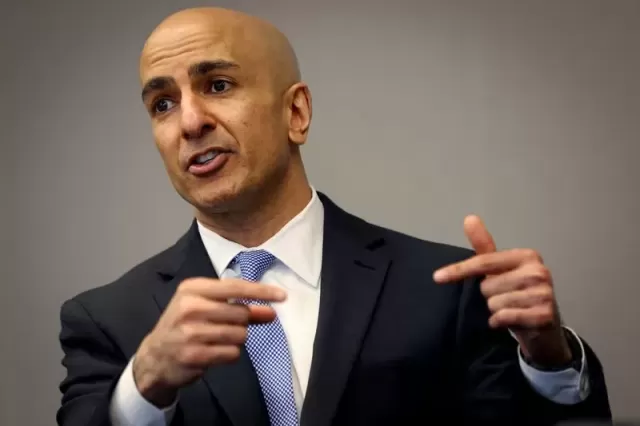
For six weeks, a standoff concerning Nexperia, a chipmaker vital to the automotive industry, threatened to bring car production lines across the globe to a screeching halt. At the center of this economic storm was Dutch Economy Minister Vincent Karremans, who asserts that the crisis underscores a dangerous over-reliance on China for essential technology.
From Corporate Asset to Geopolitical Flashpoint
Nexperia, once a part of the Philips electronics conglomerate, was acquired by China's Wingtech in 2018. For years, it operated as a key supplier of the tiny but indispensable semiconductors that power modern vehicles. The situation escalated in 2023 when U.S. authorities notified the Netherlands that they were considering adding Wingtech to a watchlist over national security concerns.
The Dutch government entered into negotiations with Wingtech's founder and Nexperia's CEO, Zhang Xuezheng, to safeguard the company's operational independence. A series of measures were agreed upon, including the creation of an independent supervisory board and a separation of Mr. Zhang's roles.
"We had a list of measures to be taken, and the understanding was that we could then present Nexperia as a Dutch company to our international partners," Minister Karremans recounted.
The Sudden Escalation and Government Intervention
In late September, the minister's perspective shifted dramatically. He received alarming intelligence from sources he describes as credible, though he cannot publicly name.
"I had people coming to my office with physical evidence that [Mr. Zhang] was moving away intellectual property rights, they were firing people, and they were looking to relocate production from Hamburg to China," Karremans stated.
This alleged attempt to shift advanced semiconductor wafer production to China was the trigger. The Dutch government perceived this not as mere corporate restructuring, but as a fundamental shift from a healthy economic interdependence to a perilous single-source dependency for Europe.
On September 30, invoking a rarely used Cold War-era law, the Netherlands assumed supervisory control of Nexperia, citing risks to "European economic security." Minister Karremans insists this decision was made independently, despite a coinciding U.S. announcement to impose import controls on the company.
"We were absolutely not pushed or pressured by the Americans to take action on this," he emphasized.
Supply Chain Chaos and a Fragile Resolution
Beijing's response was swift and severe. For four days, China banned the export of Nexperia's finished chips, instantly throwing automotive supply chains into disarray. Production pauses hit factories in Mexico, and European manufacturers warned they were merely "days away" from complete stoppages.
The crisis abated only after high-level diplomatic talks, which cleared the way for China to resume chip shipments. "For the short term, there's a solution… and we're very grateful for the steps that the Chinese authorities have taken," Karremans acknowledged.
However, the Dutch government has not yet relinquished control of Nexperia. The minister indicated that the supervisory measures will remain until the first shipments of chips physically arrive with European car manufacturers and a consistent supply is confirmed.
A Sobering Lesson in Economic Security
Minister Karremans expresses no regret over his government's aggressive stance, stating he would take the same actions again with the knowledge he has now. He hopes the entire episode serves as a catalyst for Western nations to critically examine their strategic dependencies.
The core lesson, he argues, is the danger of concentrating the production of essential technologies or raw materials within a single geopolitical sphere of influence. What began as a corporate ownership issue rapidly morphed into a geopolitical lever, demonstrating how a disruption in one specialized sector can threaten a multi-trillion dollar global industry.
Contrasting Narratives and the Road Ahead
Wingtech has firmly denied the allegations that prompted the Dutch intervention. A company spokesperson highlighted a substantial ongoing investment plan in its German facilities.
"Wingtech's $200 million investment plan for the Hamburg wafer fabrication facility is progressing steadily," the spokesperson said, noting that 150 new jobs were being created. The company stated that this positive expansion was "sidelined due to the Dutch government's intervention."
The discrepancy between the Dutch government's claims of a secretive production shift to China and Wingtech's presentation of a expanding European footprint lies at the heart of the unresolved tension.
| Aspect | The Dutch Government's Stance | Wingtech's Counter-Narrative |
|---|---|---|
| Strategic Direction | Alleged relocation of IP and production from Germany to China. | Active expansion in Germany with new jobs and a $200m investment. |
| Primary Concern | Preventing a shift from "interdependence" to "full dependency" on China. | Continuing its role as a reliable partner and investor in Europe. |
| Trigger for Action | Intelligence about physical movement of assets and firings. | Perceiving government intervention as an unwarranted disruption. |
The Nexperia affair is more than a bilateral trade dispute; it is a microcosm of the broader re-evaluation of globalization. As Minister Karremans concludes, the event is a clear signal that economic security is now inextricably linked to national and continental security, compelling Western nations to build more resilient and diversified supply chains for the critical components that underpin their economies. The standoff may be over for now, but the strategic reckoning it provoked is only just beginning.