US Federal Reserve Navigates Tricky Economic Waters Amid Trade Tensions
The United States Federal Reserve has painted a less-than-rosy picture of the American economy, revising its growth and inflation forecasts in the face of shifting global trade dynamics and domestic policy uncertainties. The central bank's latest projections, released on June 18th, signal a challenging period ahead, with higher inflation and slower economic expansion than previously anticipated.
The Fed now projects annual consumer price increases to reach 3% this year, a notable jump from the 2.7% forecast made in March. Simultaneously, expectations for Gross Domestic Product (GDP) growth have been scaled back from 1.7% to a more modest 1.4%. The Fed also anticipates a rise in unemployment, reaching 4.5% by year-end, compared to the earlier prediction of 4.4% and the current rate of 4.2%.
Despite these concerning trends, the Federal Reserve is holding steady on interest rates, maintaining its benchmark short-term rate within a range of 4.25% to 4.5%. This decision underscores the delicate balancing act the Fed faces: combating persistent inflation while avoiding a potential slowdown in economic activity.
"The Fed's wait-and-see approach reflects the inherent difficulty in navigating an environment increasingly shaped by political factors, particularly trade policy," one European economist noted. "The unpredictability of the Trump administration's tariffs presents a unique challenge for the central bank, which is tasked with maintaining price stability and full employment."
Analysts are divided on the timing of the Fed's next move on interest rates. Some, like Troy Ludtka of SMBC Nikko Securities Americas, anticipate more aggressive rate cuts than the Fed currently projects. Others, including JPMorgan Chase's Michael Feroli and Oxford Economics' Ryan Sweet, expect a single rate cut late in the year. A more cautious stance is taken by Paul Ashworth of Capital Economics, who suggests the Fed may remain on the sidelines until the first half of next year.
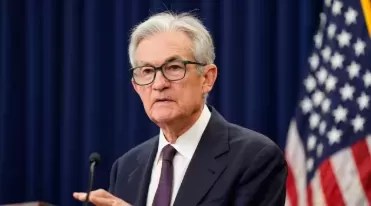
The shadow of protectionist policies looms large over the US economy. Fed Chair Jerome Powell acknowledged the potential for tariffs to drive up consumer prices and dampen economic growth. He cautioned that the full impact of the tariffs may not be immediately apparent, as the effects work their way through supply chains.
The global implications of these economic challenges within the world's largest economy are significant. The Fed's decisions will inevitably ripple outwards, impacting trade relationships, investment flows, and the overall stability of the international financial system. The coming months will be critical in determining whether the Fed can successfully steer the US economy through these turbulent waters, or whether it will succumb to the combined pressures of inflation and trade tensions.