How Environmental Instability Can Help or Hinder Evolution
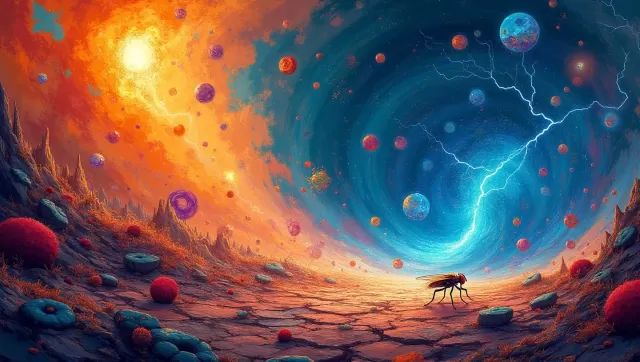
How does a world of constant change shape the evolution of life? From seasonal shifts to extreme weather swings, populations face relentless new pressures. New research reveals that the impact of this environmental instability is far from uniform, with some populations gaining an adaptive edge while others are held back.
Simulating Thousands of Generations of Evolution
A team of scientists from the University of Vermont and the University of Cambridge tackled this question using advanced computational simulations. They tracked the evolutionary paths of digital organisms across thousands of generations under varying conditions. Their findings, published in PNAS, overturned simplistic expectations. Populations in fluctuating environments showed remarkable variation in outcomes—sometimes reaching greater fitness peaks, and other times being hindered from ever maximizing their potential.
The Limitations of Single-Environment Studies
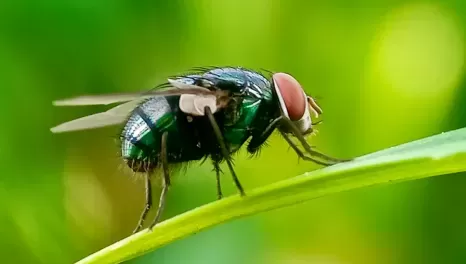
Traditional evolutionary biology often observes a single population under one fixed set of conditions. This narrow lens can miss broader, critical patterns. In nature, members of the same species face vastly different challenges; fruit flies in temperate regions cope with seasonal temperature changes, while those in arid regions cycle between drought and heavy rain. These distinct historical experiences fundamentally shape each population's evolutionary capacity.
As lead researcher Csenge Petak notes, a cycle of temperature swings may promote broad adaptation, but repeated shifts between extreme drought and rain could actually reset evolutionary progress, leaving a population less adapted than if it had experienced only one consistent stressor.
Why a Population's History is Everything
The scale of this simulation—replaying evolution hundreds of times across 105 distinct variable environments—provided unprecedented insight. A key conclusion emerged: the starting point and historical path of a population are decisive. They determine both the ultimate fitness achievable and the difficulty of the evolutionary journey. This means data from one population cannot reliably predict how an entire species will respond to change.
Real-World Implications for Climate and Health
These insights carry urgent relevance. Understanding whether species can adapt quickly enough to climate change, or how pathogens evolve antibiotic resistance, requires moving beyond one-size-fits-all models. Focusing on a single population under one type of stress can lead to misleading conclusions. Computational models like this one help formulate more nuanced hypotheses for real-world biological systems.
Parallels in Artificial Intelligence and Meta-Learning
The research also resonates beyond biology, particularly in the field of artificial intelligence. Many AI systems face the challenge of "catastrophic forgetting"—learning new tasks while losing old skills. The study of how evolution copes with variable environments offers a powerful analogy for building AI capable of continuous, lifelong learning.
This connects directly to meta-learning, or "learning to learn." Just as an AI system cannot be judged on a single task, evolvability—the capacity of a system to evolve—cannot be understood by studying one environment alone. True evaluation requires testing across many comparable but distinct conditions.
Ultimately, evolution is sculpted not merely by the presence of change, but by the specific sequence, nature, and history of those changes. The choice of variable environment strongly steers the outcome, proving that in a world of flux, context is king.