UK Plans "Forest Cities" for Housing and Nature
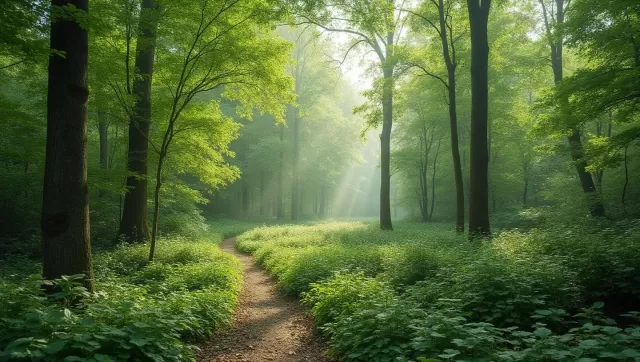
The UK government is embarking on an ambitious vision to integrate significant new housing development with extensive tree planting and the creation of new national forests. This initiative aims to address the nation's housing needs while simultaneously boosting biodiversity, creating green jobs, and combating climate change. The strategy centers on the development of "forest cities" within the burgeoning Oxford-Cambridge (Ox-Cam) corridor, designed to bring nature and sustainable living closer to residents.
The Ox-Cam Corridor: A Hub for Innovation and Nature
At the heart of this plan is the Ox-Cam corridor, a region earmarked for substantial economic growth and technological advancement, often dubbed "Europe's Silicon Valley." Chancellor Rachel Reeves has announced significant investment to foster this growth, projecting an economic boost of up to £78 billion by 2035. This economic ambition is now intrinsically linked with environmental stewardship.
The government proposes building new towns and improved rail links along this corridor. Crucially, these urban developments will be complemented by a new national forest. This ensures that new communities will have immediate access to extensive green spaces, fostering a high quality of life and providing a natural counterpoint to the urban infrastructure.
Forest Cities: Blending Urban Living with Natural Abundance
Nature Minister Mary Creagh has drawn a parallel to the post-World War II "garden city" movement, but with a modern, eco-centric twist. The concept of "forest cities" aims to weave nature directly into the fabric of these new communities. Residents will be within a mere 10-minute walk of the forest, creating an environment where people can build families, thrive, and where nature can flourish. This approach is intended to demonstrate that large-scale housebuilding can coexist with, and even enhance, natural environments.
The initiative is also positioned as a key part of the UK's international climate commitments. Mary Creagh highlighted that this vision will be a central component of Keir Starmer's offering at the COP30 summit, showcasing the UK's dedication to climate action on a global stage. The message is clear: the government and developers can leverage trees and green infrastructure not just for environmental benefit, but as a fundamental element in building desirable and sustainable communities.
Economic Growth Through Green Investment
The strategy explicitly links environmental policies to the Chancellor's "economic growth mission." The Department for Environment, Food and Rural Affairs (Defra) emphasizes that tree planting is a driver of growth. Meeting tree planting targets across Britain is projected to create and support over 14,000 jobs.
Furthermore, Defra is exploring innovative financial mechanisms, such as a woodland carbon purchase fund. This fund would offer upfront payments to landowners to incentivize the creation of carbon-rich woodlands, providing a direct economic benefit for environmental stewardship.
Expanding National Forests: A Commitment to Biodiversity
This initiative is not confined to the Ox-Cam corridor. The government has committed to establishing three new national forests:
- West Country: Planting is already underway for the Western Forest, the first new national forest in three decades, which will span from the Cotswolds to the Mendips.
- Ox-Cam Corridor: A second national forest will be established in the Oxford-Cambridge region.
- Northern England: A competition will be launched early next year to determine the location for a third national forest, demonstrating a nationwide commitment to expanding green spaces.
This commitment is backed by a significant investment of over £1 billion allocated for tree planting and support for the forestry sector during the current parliamentary term.
Key Pillars of the "Forest Cities" Initiative:
| Aspect | Description | Benefits |
|---|---|---|
| Location | Oxford-Cambridge (Ox-Cam) corridor, with additional national forests in the West Country and Northern England. | Strategic economic development, broad environmental coverage, and national biodiversity enhancement. |
| Concept | "Forest Cities" – new urban developments integrated with extensive new national forests. | Close proximity to nature for residents, enhanced quality of life, and sustainable community building. |
| Housing Integration | Homes designed to be within a 10-minute walk of forest areas. | Seamless integration of urban living and natural landscapes. |
| Economic Drivers | Creation of green jobs, potential for significant economic growth (£78bn by 2035 for Ox-Cam), and new funding mechanisms for landowners. | Stimulating the economy through environmental investment, creating employment opportunities. |
| Environmental Goals | Boosting England's nature, tackling climate change, creating high-quality habitats, and meeting legally binding nature targets. | Improved air and water quality, enhanced biodiversity, carbon sequestration, and climate resilience. |
| Government Vision | Demonstrating that mass housebuilding can be delivered in conjunction with new nature, fulfilling manifesto commitments. | Reconciling development pressures with environmental protection, positive international climate signaling. |
| Funding Commitment | Over £1 billion allocated for tree planting and forestry support over the current parliament. | Long-term investment in the green sector and natural infrastructure. |
Biodiversity Measures and Future Plans
The government's broader strategy for biodiversity is expected to be detailed in the forthcoming rewritten environmental improvement plan. This plan will outline how ministers intend to meet the legally binding nature targets established by the 2021 Environment Act. These targets are crucial for ensuring the UK's natural environment is protected and enhanced for future generations.
Emma Reynolds, the Environment Secretary, underscored the vital role of woodlands in regulating the climate, supporting wildlife, and increasing public access to nature. The establishment of these three new national forests is a tangible step towards fulfilling these objectives.
Addressing Concerns and Moving Forward
The announcement comes at a time when the government faces scrutiny from nature groups regarding deregulation in the planning bill. By emphasizing the integration of new nature with housing development, ministers aim to allay these concerns and demonstrate a commitment to a more balanced approach. The "forest cities" concept is a strategic response, designed to prove that economic progress and environmental preservation can go hand-in-hand, creating attractive, sustainable, and thriving communities for the future.
The creation of these forest cities and national forests represents a significant shift towards a more integrated approach to land use planning. It acknowledges that robust economic development can be achieved through investments that simultaneously bolster the natural environment, creating a win-win scenario for both people and the planet. The success of this initiative will hinge on careful planning, effective implementation, and ongoing collaboration between government, developers, and environmental stakeholders.