Shipping Container Solution: London Startup Tackles Maritime Pollution
In an unexpected corner of London, a groundbreaking innovation is emerging that could revolutionize the shipping industry. Seabound, a company based in Chingford, is developing a technology aimed at capturing carbon emissions directly from cargo ships, one of the world's most polluting sectors.
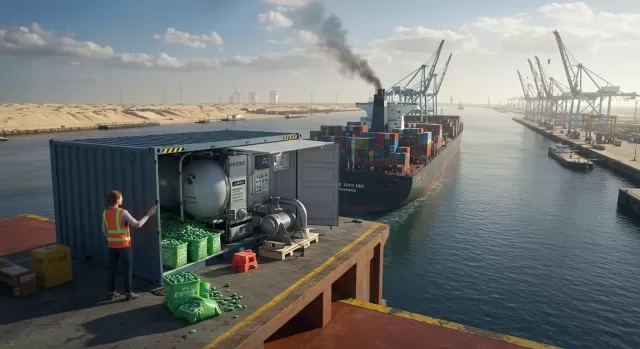
The heart of this solution lies within a modified shipping container, filled with quicklime pellets. Exhaust fumes from a diesel generator are channeled through the lime, triggering a chemical reaction that transforms carbon into limestone, effectively scrubbing the exhaust of its harmful carbon content.
Spearheading this venture is Alisha Fredriksson, Seabound's CEO. Her path shifted dramatically after encountering an IPCC report highlighting the stark difference between 1.5C and 2C of global warming. This realization ignited a passion to tackle the climate crisis head-on, ultimately leading her to the challenge of decarbonizing the maritime industry.
Initial trials have demonstrated the technology's effectiveness, removing a significant portion of carbon and sulphur from ship exhaust. Fredriksson envisions these containers deployed across the global fleet, offering a tangible solution to maritime pollution.
With co-founder Roujia Wen, she refined existing quicklime carbon capture technology for maritime application. Seed funding was successfully secured. These early prototypes have undergone extensive testing, including a voyage through the Suez Canal, where they demonstrated the ability to capture substantial portions of the carbon and sulphur dioxide from exhaust fumes.
The current prototype is engineered to fit seamlessly within existing cargo arrangements, designed as a standard 20ft shipping container. This allows for easy integration and incremental carbon capture, scaling with the ship's needs and journey length.
Once the containers reach port, they are replaced with fresh quicklime. Seabound is also committed to using renewably produced quicklime.
While carbon capture technologies are gaining attention, some argue that it risks delaying the transition to truly sustainable options, such as ammonia or wind-powered ships.
Fredriksson contends that Seabound's technology complements this transition. With new regulations requiring ships to pay for exceeding emission thresholds, it offers a way for ships to gradually decarbonize and adjust to greener standards.
As with any startup, scaling up poses challenges. However, with units priced competitively, and with committed partners ready to implement this solution, Seabound's vision is becoming a reality. Fredriksson's ambition is clear: to see Seabound technology deployed on thousands of ships worldwide, supported by hubs in major ports around the globe.