New Tool Reveals Stomatal Secrets for Drought-Resistant Crops
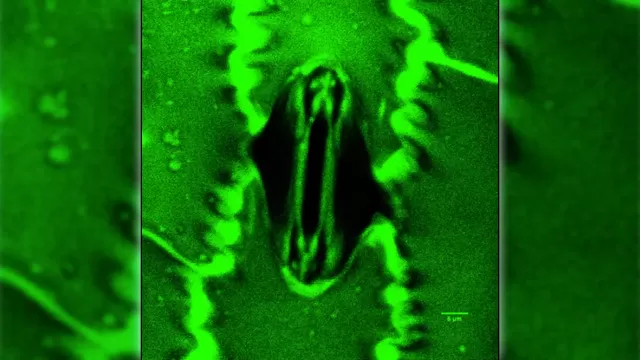
For decades, plant scientists have grappled with a fundamental challenge: observing the critical dance between a plant's need for air and its need to conserve water in real time. The microscopic pores on leaves, called stomata, control this exchange, but capturing their dynamic behavior alongside precise environmental data has remained out of reach. A breakthrough from the University of Illinois Urbana-Champaign has finally closed this gap, offering an unprecedented window into plant life.
The Crucial Role of Stomata in Global Agriculture
Acting as gatekeepers on the leaf surface, stomata perform a delicate balancing act. Their primary function is to open and allow carbon dioxide to enter for photosynthesis—the process that fuels plant growth. However, this opening simultaneously permits water vapor to escape. This trade-off makes stomatal behavior a key determinant of a plant's water-use efficiency. In a world where drought and water scarcity increasingly threaten food security, understanding and optimizing this process is critical for developing resilient crops that require less water without sacrificing yield.
Historically, researchers faced a significant methodological compromise. They could either capture a static snapshot of stomata using techniques like leaf impressions or measure overall gas exchange in a controlled environment, but not both simultaneously. Since stomata react within seconds to factors like light intensity, humidity, and carbon dioxide concentration, this disconnect limited the ability to link structure directly to function under realistic conditions.
A Trio of Technologies Unlocks Real-Time Observation
The innovative solution, named "Stomata In-Sight," integrates three advanced systems into a single platform, revolutionizing live plant analysis.
- Live Confocal Microscopy: This non-invasive imaging technique uses lasers to generate detailed, three-dimensional views of living stomatal cells without damaging the leaf tissue.
- Precision Gas Exchange Measurement: Sensitive instruments attached to the system provide exact, concurrent data on carbon dioxide uptake and water vapor release from the same leaf being observed.
- Fully Controlled Environment: A specialized chamber allows scientists to meticulously adjust and replicate a wide range of environmental conditions, from sunlight simulation to atmospheric dryness.
This integration means researchers can now watch stomata open and close in real time while precisely quantifying how those movements affect the plant's gas exchange, all under customizable conditions that mimic field stresses.
Implications for the Future of Crop Development
The ability to directly correlate stomatal activity with environmental drivers and functional outcomes is a game-changer for plant biology and agricultural breeding. The system enables scientists to:
- Decipher the specific physical and chemical signals that trigger stomatal movements.
- Study how the density and patterning of stomata on a leaf influence overall water-use efficiency.
- Identify genetic markers associated with optimal stomatal behavior.
This knowledge paves the way for engineering "smarter" crops—varieties that can meticulously manage their water loss while maximizing carbon intake. With water availability being the foremost environmental constraint on global agriculture, such advances are vital for ensuring sustainable production of food, biofuel, and bioproducts in a changing climate.
The research team from the University of Illinois' Department of Plant Biology and Institute for Genomic Biology developed this tool with support from the U.S. Department of Energy, the National Science Foundation, and philanthropic contributions. Their open-access study, detailing the "Stomata In-Sight" system, is available in the journal Plant Physiology.